

The Value Equation: Slowness Destroys Perceived Quality
Entrepreneur Alex Hormozi popularized a practical framework for how clients evaluate value:
Breaking Down the Equation
Look at what sits on the bottom half of Hormozi's equation: Time Delay and Effort & Sacrifice.
The moment a user clicks your link, that calculation starts running before they ever see your pricing or pitch:
- Time Delay rises: Every second of waiting makes reaching you feel like an ordeal.
- Effort rises: If the screen jumps around while loading, if buttons lag on tap, and if forms feel clunky, the cognitive effort required to work with you feels higher.
Why Good Sites Slow Down Over Time
Slowness inflates the effort required to contact you. When your page renders instantly, in under a second, you drive perceived effort down to near zero. Subconsciously, the visitor assumes your business is sharp, responsive, and organized.
When we audit business websites, owners often tell us they spent thousands on their site just a year or two ago. The site often looks visually clean, but it feels heavy on a phone.
This usually is not anyone's fault. Traditional content management systems like WordPress are great tools for simple blogging and publishing. But as a business grows, new needs pop up: contact forms, live chat, lead tracking, typography packs, and analytics widgets.
Each feature is typically added through a new plugin or script. Over time, that code stacks up.
When a prospective client tries to open that page on a mobile device over a normal cellular connection, their phone has to download and parse dozens of stylesheets and scripts before rendering text. The result is layout shifts, delayed touch responses, and visitors who lose patience and leave.
How We Build for Instant Execution
At MARNV, our approach is focused on cutting out the technical weight between your visitor and your phone.
We build on modern architectures like Next.js and host pages globally on the Cloudflare Edge network:
- Edge Delivery: Rather than routing every request back to a single shared server in another state, pages are served directly from data centers physically closest to the user.
- Optimized Media: Images are automatically resized and served in modern formats like WebP so mobile bandwidth is never wasted.
- Minimalist Code: We ship only the exact styles and scripts required to render the screen cleanly.
The Takeaway
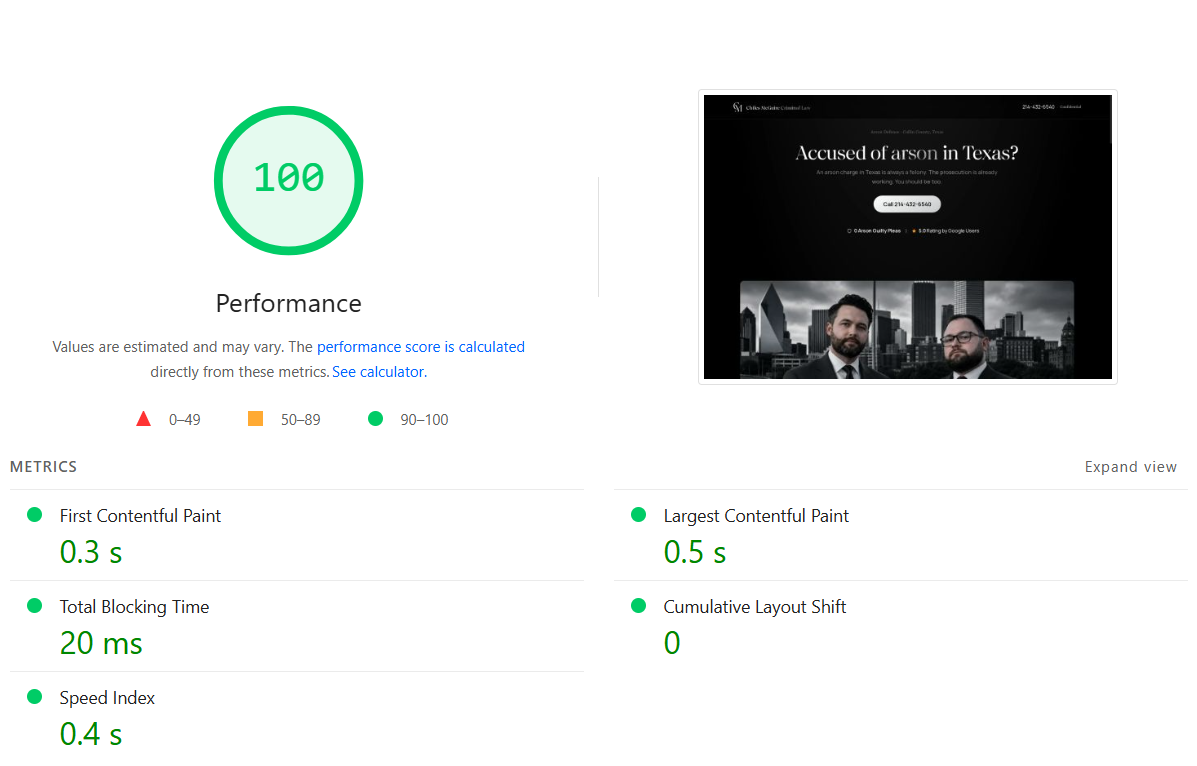
The result is a platform that loads in under a second on mobile, responds immediately to thumb taps, and keeps your visitor focused on taking action.
Speed is not an engineering vanity metric. It is the elimination of friction.
Before you invest more budget into search ads, social campaigns, or complete brand overhauls, test how your current website actually performs on a phone with an average connection. If it takes longer than two seconds to load, you do not have a lead generation problem. You have a friction problem.